


Using alum to cause sedimentation to purify water
Alum can be added to reduce electric charge in liquids. Through the process of coagulation, large particles can be separated and removed from the liquid.
Alum has the ability to destabilize suspended particles. This causes flocculation – a process where particles group together into larger solids and can be removed from the liquid.
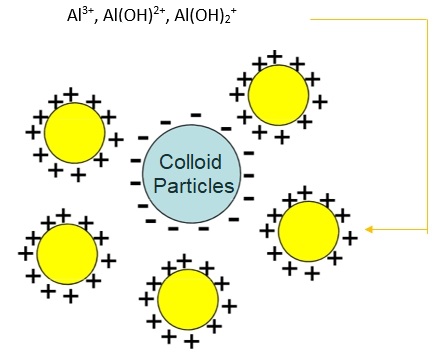
Figure 1: Alum, when dissolved, creates positive charges that bond with suspended particles.
How to
1.Suspend the alum in water

Alum should be suspended 2/3 below the water surface until particles begin to flocculate and larger solids are formed. The amount of time this process takes depends on the nature and amount of liquid. A flashlight can be helpful in observing these solids.
2.Add alum solution

The alum solution should be added and mixed in with a mixer. The mixer should first be set at high speed for a brief period before being set at low speed. The solution should be mixed until particles flocculate into larger solid pieces. Once the mixing has stopped, these particles will settle at the bottom of the container as the solution is left to stand. The remaining clear water can be utilized.

Head Office : 1177 Pearl Bangkok Building, 12A floor, Unit 12A03, Phaholyothin Road, Phaya Thai, Phaya Thai, Bangkok 10400 Thailand

E-mail (Head Office)
salesbkk@mahachaichemicals.com

Engine By CW | Copyright : 2026 www.mahachaichemicals.com

